 Made in Slovakia
 ISO 9001 Made in Slovakia ISO 9001
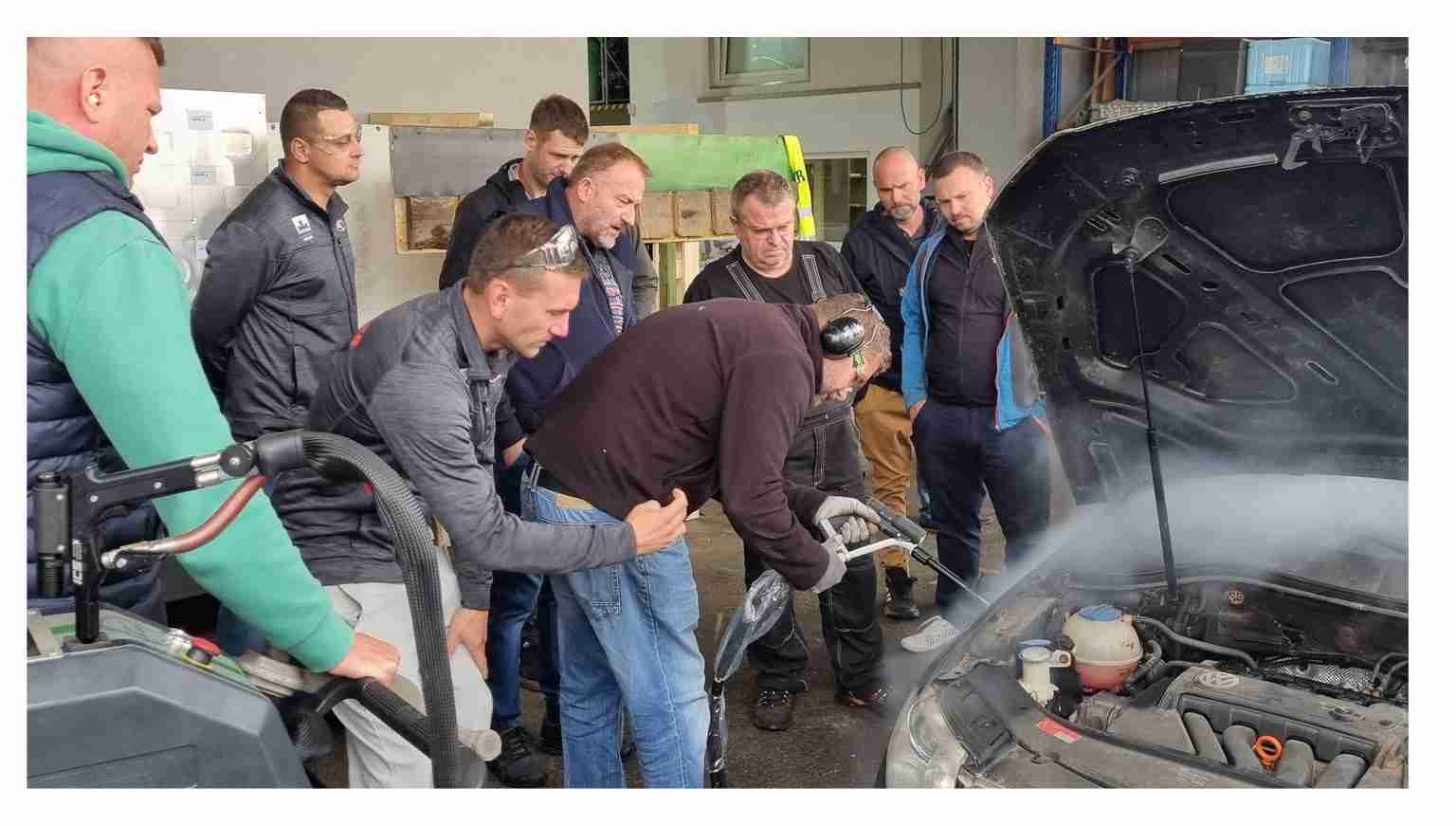 Is Operator Training Required for Dry Ice Blasting?
Dry ice blasting is widely recognized as a safe, non-abrasive, and environmentally friendly cleaning technology. However, a common question from companies considering this method is: Is operator training really necessary? The short answer is yes. While dry ice blasting is safer than many traditional cleaning methods, proper operator training is essential to ensure safety, protect equipment, and achieve consistent, high-quality results.
Dry ice blasting is not just “point and shoot.” It combines compressed air, solid CO₂ pellets, and precise machine settings. Without proper knowledge, even a non-abrasive process can be misused. Training ensures that operators understand how the technology works, how to adjust parameters correctly, how to clean efficiently without damaging surfaces, how to operate safely in different environments, etc. Operator training is not just about safety. It is about:
CO₂ exposure awareness
Dry ice sublimates into carbon dioxide gas. In confined or poorly ventilated spaces, CO₂ can reduce oxygen levels. Trained operators know how to assess ventilation conditions, use CO₂ monitors when required, recognize early warning signs of CO₂ overexposure, atc.
Dry ice blasting systems rely on compressed air, often at high pressures. Incorrect handling can lead to hose failures, uncontrolled movement, or injury. Training covers safe hose and connection handling, pressure control and system startup procedures, emergency shutdown protocols.
Like most blasting technologies, dry ice blasting can be loud and may release debris from removed contamination. Operators are trained in proper use of hearing protection, eye and face protection, protective gloves and clothing for cold exposure.
Quality & performance benefits of trained operators
Every application requires the right balance of Air pressure, Pellet size, Feed rate, Nozzle type and distance. Incorrect settings can result in poor cleaning performance, wasted dry ice, or surface damage. Training allows operators to fine-tune these parameters for each job.
Grease, oil, paint, rubber, carbon buildup, and adhesives all react differently to dry ice blasting. A trained operator knows How different contaminants behave, When dry ice blasting is the best solution, How to test and adjust settings before full-scale cleaning.
Reduced downtime
Trained operators clean faster and more accurately, often allowing equipment to be cleaned in place without disassembly. This significantly reduces maintenance downtime.
Proper training helps reduce excessive dry ice consumption, unnecessary air usage, rework caused by incomplete or uneven cleaning. This improves overall cost efficiency and return on investment.
A comprehensive training program usually covers equipment setup and operation, safety procedures and risk assessment, parameter adjustment and nozzle selection, maintenance and basic troubleshooting, hands-on application training.