 Made in Slovakia
 ISO 9001 Made in Slovakia ISO 9001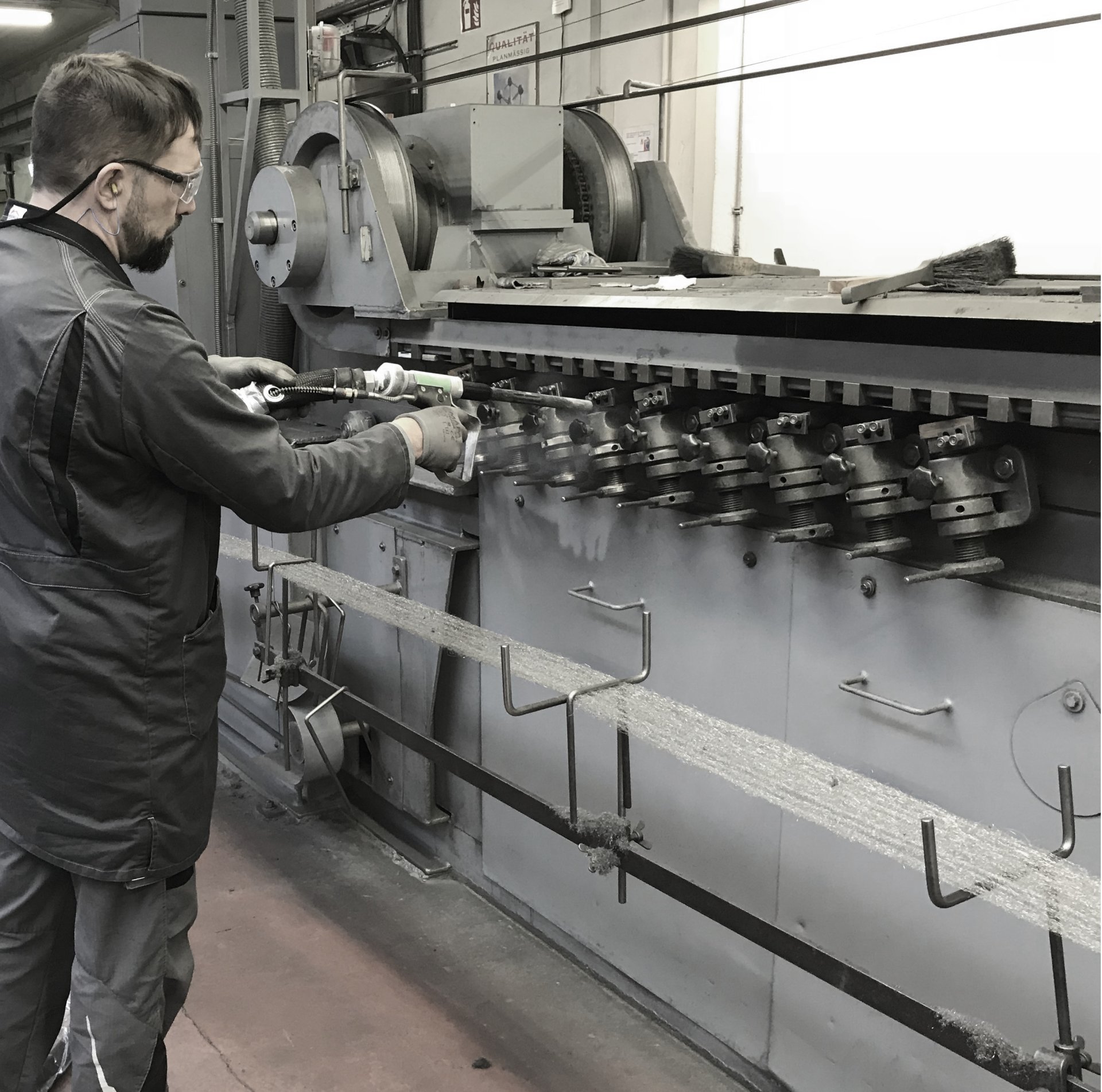
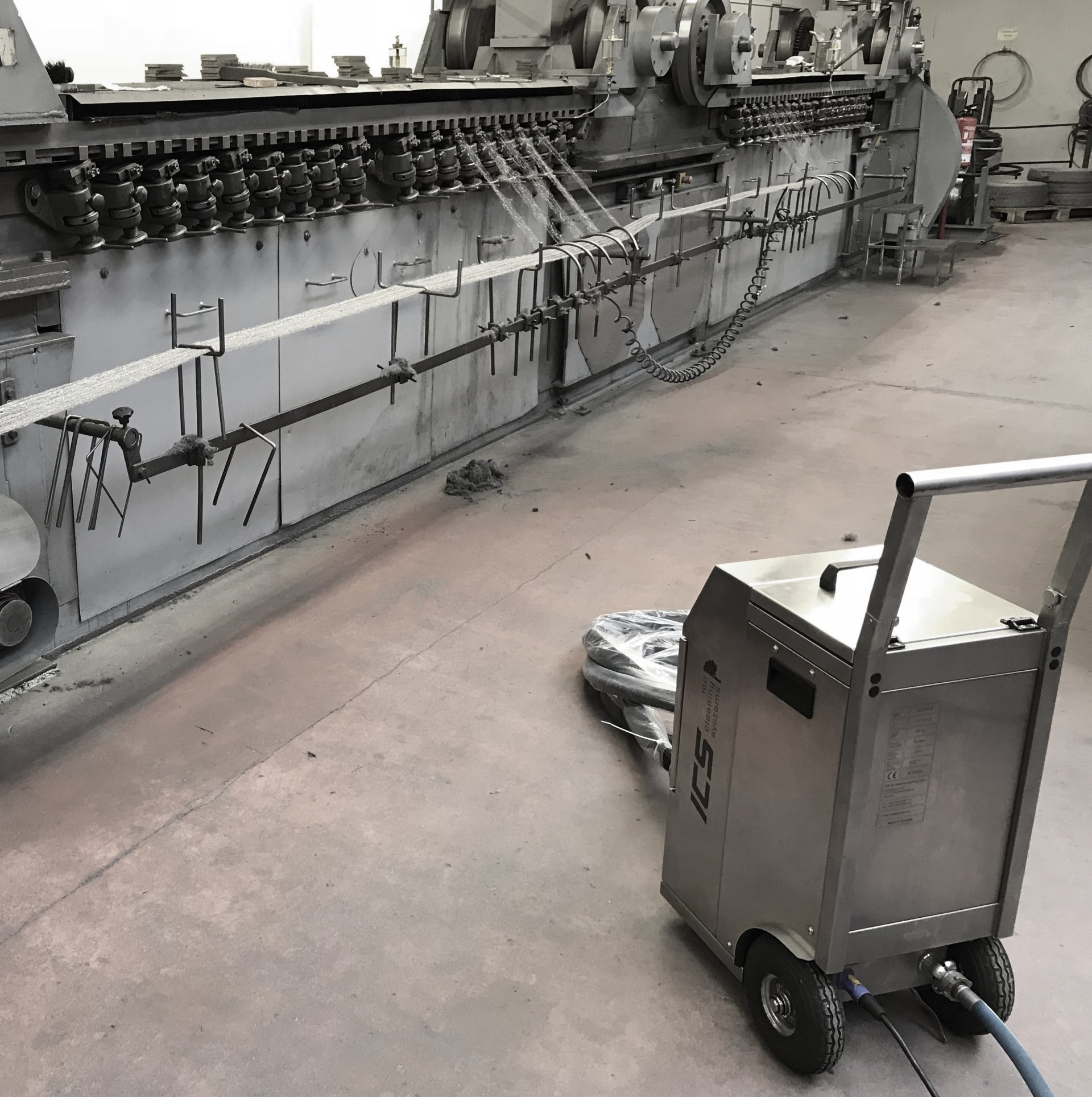
Dry ice cleaning is widely used in the textile industry - from maintenance of production equipment, through textile printing processes, to specialized cleaning of finished textiles. Thanks to its versatility, gentleness, and efficiency, it represents a modern solution that improves production quality, extends equipment lifespan, and reduces environmental impact. It is a non-abrasive and eco-friendly cleaning method that effectively removes inks, adhesives, resins, textile residues, and other contaminants without damaging surfaces or requiring equipment disassembly.
1. Cleaning of Rollers and Production Equipment
One of the most common applications of dry ice in the textile industry is the cleaning of rollers, printing units, and calender systems:
✔ removal of dried inks, pigments, and chemicals
✔ removal of fibers and fabric residues
✔ cleaning of engraved rollers without damaging fine details
A major advantage is that cleaning can be performed directly on-site, often without completely stopping production, significantly reducing downtime.
2. Cleaning in Textile Printing
In screen printing, digital printing, and other technologies, dry ice is used for:
✔ cleaning print heads, frames, and screens,
✔ removing residues of inks and adhesives,
✔ maintenance of conveyors and drying equipment.
The non-abrasive nature of this method ensures that expensive components are not subject to wear.
3. Cleaning of Finished and Delicate Textiles
Dry ice is also used for specialized cleaning of certain types of textiles where water or chemical cleaners cannot be applied.
✔ removal of PUR foam from car seats,
✔ removal of resin and asphalt,
✔ cleaning textiles contaminated with adhesives,
✔ removal of chewing gum from upholstery, carpets, and technical textiles.
Thanks to the extreme cooling, contaminants become brittle and can be easily separated from the fibers without causing damage.
4. Maintenance of Textile Machinery and Production Lines
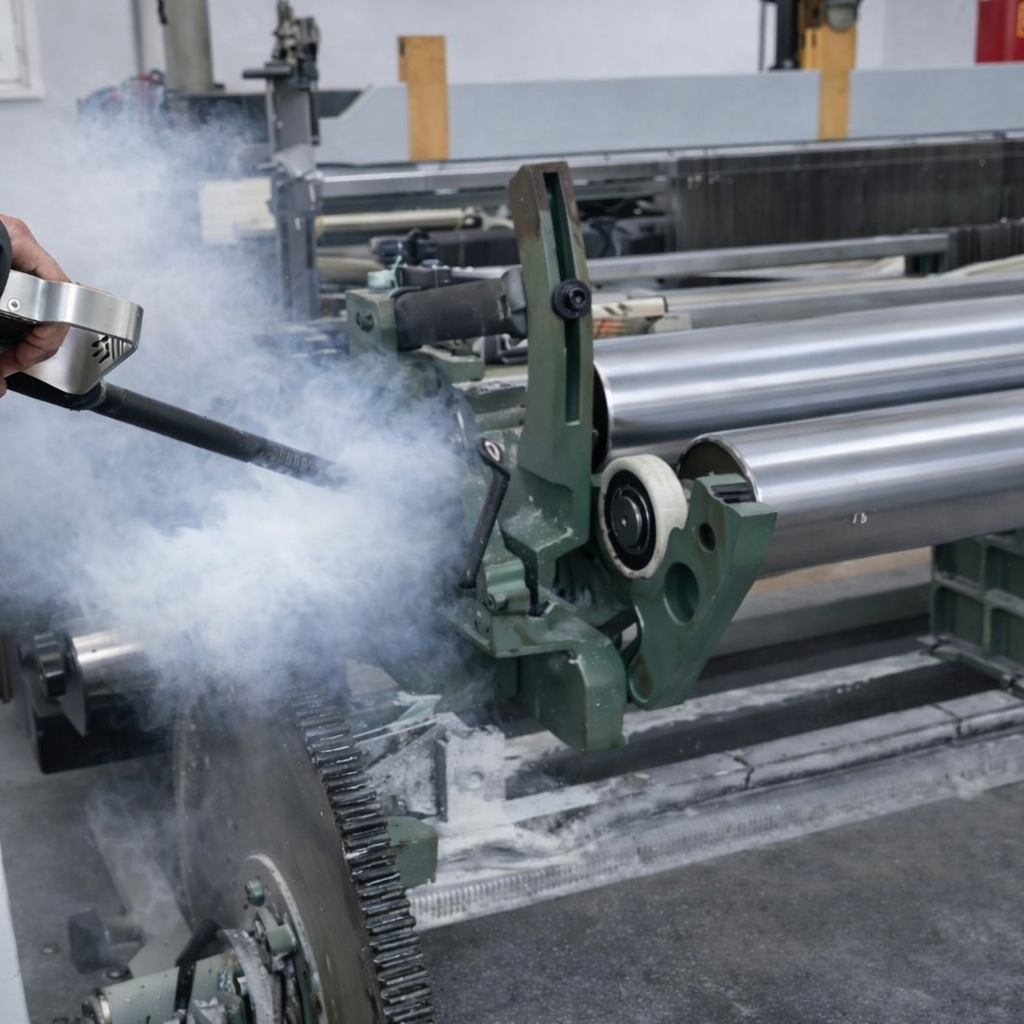
As this is a dry process, there is no risk of damage to electronics or corrosion of metal parts. Dry ice is ideal for cleaning:
✔ weaving and knitting machines,
✔ sewing lines, cutting and laminating equipment,
✔ sensors, motors, and electrical control panels.
5. Environmental and Economic Benefits
The use of dry ice in the textile industry offers several advantages:
✔ no water or chemicals required, minimal waste,
✔ reduced maintenance costs,
✔ environmentally friendly solution.
This technology complies with strict environmental standards and supports sustainable production.